Showing posts with label EU and EMU - Politics and Economics. Show all posts

Saturday, 10 February 2018

A Brief Memo On The Path From Here Following The Stock Market Correction


Broad-based financial bubbles are created by an expanding rate of monetary inflation whether expected or not. The more aggressive this expansion and the longer it lasts, the bigger the bubble, especially when official CPI inflation measures remain "subdued" and "well-anchored". Add a near decade-long ZIRP on top and you've got the recipe for an equity bubble of epic proportions - like we currently have in the U.S. and in many other stock markets around the fiat-money world. The deflation over the last week does little to change that (only makes it about 10% less worse than it already was).

About four years ago, stock prices started dislocating from a broad range of economic aggregates spanning GDP, manufacturing, retail sales, corporate earnings and dividends, and personal spending- and saving. And that is just mentioning a few of many. Already back then, stock market valuations started resembling those of the late 1990s and the build up to the previous U.S. banking crisis back in 2007.

Today, the U.S. stock market bubble far surpasses these two, both in terms of length and height. Not in terms of earnings, but in terms of every other fundamental that mattes more. This cannot be rationalized away by merely pointing to historical low interest rates. After all, they are in epic bubble territory as well as they are made possible only by central bank interventions and the resurgence of bank credit a few years back which, if continued, would mean the death of the current monetary system - of which there are great forces in play to protect the very existence of.

Naturally, the low level of interest rates (no matter how they come about) do justify elevated multiples. But nothing like those observed today this late in the money cycle and certainly not when interest rates are now actually rising.

Sure, a slim margin of interest rate increases were indeed baked into equity valuations when judged by the spread between the earnings yields and treasury bond yield. But these modest expectations as to where the future level of interest rates might be heading are now perhaps dawning on speculators as somewhat optimistic. The extravagant valuations of U.S. stocks today alone bear promises of poor future returns, even after slicing off around 10% of market prices during the last week or so (in case you're thinking about "buying any dip"). A 50% decline should surprise no sane person.

But the correction during the last week is a healthy one. At least so I've been told on numerous occasions. But healthy for whom and why? Pundits are either dumb or incompetent, and I'm still not sure which one is preferable. My vote however goes to the former. A drop in stock market prices is only healthy for those waiting to buy an expected dip. Period. It's not like the economy is reset somehow and gaining strength to grow further after a dip. Nothing fundamental happens when stock prices fall. The only thing affected is confidence, the very "foundation" of the faulty economic doctrines promoted by new-Keynesians, politicians, and other demagogues and cranks alike. Falling stock market prices have nothing to do with the real economy as all they ever accomplish is to change the hands of whom ever has the claim on real wealth. It's a matter of distribution, not loss of wealth to society. This is a fundamental concept few pundits are capable of even think about swallowing.

For decades, but on a substantially larger scale today than perhaps ever, we all in the western hemisphere live in societies where an ever-expanding class of parasites feed off an ever-shrinking class of wealth creators. Should you doubt this sweeping claim, I dare you to tell me why debt keeps expanding relative to income and saving despite ingenious entrepreneurs hard at work reducing our daily costs of living. If you can answer that question convincingly and conclusively, I see few reasons why you should not be awarded an accurate version of the Nobel memorial prize in economics. Attempts linking debt to nominal wealth will not be accepted, for reasons too obvious to mention. Government employees, lawyers and consultants making a living thanks to bureaucrats imagined and self-created problems, organisations living on state grants and subsidies; these are the sectors where "growth" are found, in addition to those hopeless projects aimed too far in the future to benefit any present-day living person. The economic waste that is the war machine, destroying livelihoods, dreams, and life around the world, especially the middle east - nothing to do with oil and power, right? Not to mention the armies of accountants wasting precious resources upholding meaningless accounting standards not benefiting the companies footing the bills, but the government narcissists demanding it, not to mention the lawyers feeding on the mistakes of both. The list is incredibly long, so long no one central planner or governments task force possesses nearly all the information necessary to keep an accurate account.

So what's the path from here? I see two; rampant money printing or a firm return to sound money. The truth will be neither. Social democrats always choose the middle-road. And they are the ones whom after all run financial regulations and politics, with the absent consent from voters whom increasingly know more and more about less and less.

Poverty will increase. Options will shrink. Decisions made on behalf of you and me will increase on account of people who are further and further distanced from where real decisions ought to be made. The path toward increased central planning, the chosen path after WWII, will prevail for many years to come and with ever-greater force and conviction. Until we all run out of purchasing power to buy the bare necessities. That's when revolutions find their breeding ground and new socialists solutions are once again re-invented to save everybody at the expense of everyone else.

Monday, 31 July 2017

Latest memo from Howard Marks: There They Go Again...Again

By Howard Marks
Some of the memos I’m happiest about having written came at times when bullish trends went too far, risk aversion disappeared and bubbles inflated.  The first and best example is probably “bubble.com,” which raised questions about Internet and e-commerce stocks on the first business day of 2000.  As I tell it, after ten years without a single response, that one made my memo writing an overnight success. 
Another was “The Race to the Bottom” (February 2007), which talked about the mindless shouldering of risk that takes place when investors are eager to put money to work.  Both of those memos raised doubts about investment trends that soon turned out to have been big mistakes.
Those are only two of the many cautionary memos I’ve written over the years.  In the last cycle, they started coming two years before “The Race to the Bottom” and included “There They Go Again” (the inspiration for this memo’s title), “Hindsight First, Please,” “Everyone Knows” and “It’s All Good.”  When I wrote them, they appeared to be wrong for a while.  It took time before they were shown to have been right, and just too early. 
The memos that have raised yellow flags in the current up-cycle, starting with “How Quickly They Forget” in 2011 and including “On Uncertain Ground,” “Ditto,” and “The Race Is On,” also clearly were early, but so far they’re not right (and in fact, when you’re early by six or more years, it’s not clear you can ever be described as having been right).  Since I’ve written so many cautionary memos, you might conclude that I’m just a born worrier who eventually is made to be right by the operation of the cycle, as is inevitable given enough time.  I absolutely cannot disprove that interpretation.  But my response would be that it’s essential to take note when sentiment (and thus market behavior) crosses into too-bullish territory, even though we know rising trends may well roll on for some time, and thus that such warnings are often premature.  I think it’s better to turn cautious too soon (and thus perhaps underperform for a while) rather than too late, after the downslide has begun, making it hard to trim risk, achieve exits and cut losses.
Since I’m convinced “they” are at it again – engaging in willing risk-taking, funding risky deals and creating risky market conditions – it’s time for yet another cautionary memo.  Too soon?  I hope so; we’d rather make money for our clients in the next year or two than see the kind of bust that gives rise to bargains.  (We all want there to be bargains, but no one’s eager to endure the price declines that create them.)  Since we never know when risky behavior will bring on a market correction, I’m going to issue a warning today rather than wait until one is upon us. 
I’m in the process of writing another book, going into great depth regarding one of the most important things discussed in my book The Most Important Thing: cycles, their causes, and what to do about them.  It will be out next year, but this memo will give you a preview regarding one of the most important cyclical phenomena.
Before starting in, I want to apologize for the length of this memo, almost double the norm.  First, the topic is wide-ranging – so much so that when I sat down to write, I found the task daunting.  Second, my recent vacation gave me the luxury of time for writing.  Believe it or not, I’ve cut what I could.  I think what remains is essential.

Thursday, 23 March 2017

ECB 2016 Financial Accounts: The Ever-Inflating Direct Costs of Central Supervision

Source: European Parliament Approves the Single Supervisory Mechanism

Right, a bit late with the commentary this year, but on 16 February the European Central Bank (ECB) published its financial accounts for 2016.

As has by now become a tradition, the ECB spending spree continued despite eurozone debt problems growing larger every year, the latter of course facilitated by the former.

Due primarily to ECB money printing as QE related assets increased by €83 billion, the balance sheet inflated €92 billion during the year, an increase of 36%. Since 2012, the bank's assets have increased €142 billion, or 68.4%.

Headcount continued to increase due to, according to the ECB, the Single Supervisory Mechanism (SSM). The number of staff employed at year end increased by 300 (10.4%). There are today 1,381 more staff working for the ECB than in 2013, a total increase of 77.2%. At year end, total headcount stood at 3,171.

During 2016, total administrative expenses increased €90 million, or 10.4%, to €954 million. According to the ECB, "This increase was due to higher costs incurred in connection with the Single Supervisory Mechanism (SSM)." But not to worry as "The full SSM-related costs are recovered via fees charged to the supervised entities." Total administrative expenses have by now increased €490 million since 2012, a total increase of 105.6%.

Depreciation expenses for the year was €65 million, largely unchanged from previous year, but up €49 million (323%) compared to 2014. This increase was directly caused by the €1.4 billion new ivory tower housing ECB staff that was completed in 2014/15.

The largest contributor to the increase in total administrative expenses during the year was "administrative expenses" which increased €63 million, or 18.0%. Again, this was driven by costs related to the SSM according to the ECB.

Staff costs per head actually decreased to €147,127, down 4.2% on 2015, but was still 9.5% higher than in 2013.


Draghi's compensation, not including lavish high-living expenses fully paid for by the ordinary citizens from whom he with great effort every day confiscate purchasing power, was €389,760 - a "well-anchored" 1.0% increase way below his own inflation target.

The ECB 2016 accounts can be downloaded here.


Also see: The 2014 and 2015 EcPoFi articles on the ECB accounts.


Tuesday, 21 February 2017

Stress Tests don’t work

By Gordon Kerr

Criticisms of bank stress tests continue to mount, particularly as banks continue to struggle. A new problem recently emerged: the marked shortfall between the market capitalisation of most European banks and their book values.

This should soon lead to a new stress test methodology. This will be a direct response to pressure applied to the Bank of England by Steve Baker MP and other members of the relevant Parliamentary scrutiny committee. Baker and colleagues have forced the Bank of England (the “Bank”) to respond to criticisms led by Sir John Vickers and Professor Kevin Dowd that since the current stress tests are based only on book numbers, they are unreliable.

If the Bank changes its methodology, it will surely encourage Europe to follow. Given the credibility threats facing European bank regulators, and as Unicredit’s rights issue causes further jitters in Italian bank share prices, we expect Europe to welcome such recommendations.

Continue reading the article here.


Wednesday, 10 August 2016

Bank Of England QE And The Imaginary 'Brexit Shock'

By Acting Man,

Mark Carney, Wrecking Ball
For reasons we cannot even begin to fathom, Mark Carney is considered a "superstar" among central bankers. Presumably, this was one of the reasons why the British government helped him to execute a well-timed exit from the Bank of Canada by hiring him to head the Bank of England (well-timed because he disappeared from Canada with its bubble economy seemingly still intact, leaving his successor to take the blame).

The adulation he receives is really a major head-scratcher. What has he ever done aside from operating the "Ctrl. Prnt." buttons? As far as we are aware, nothing. As we have discussed previously, his main legacy is that he has left Canada with one of the greatest and scariest real estate and consumer credit bubbles extant in the world today. Some accomplishment!

With respect to his economic analysis, it seems not the least bit different from the neo-Keynesian/semi-monetarist mumbo jumbo we get to hear from central bankers everywhere. This is by the way no surprise: they're an incestuous bunch and have largely received their education at the same institutions.

Most of them seem genuinely convinced that central planning not only works, but is necessary to improve on the alleged drawbacks of an "unfettered market" (i.e., the mythical unhampered free market economy no-one alive today has ever experienced). If one looks closely at what they are actually doing, it soon becomes clear that it is in principle not much different from what John Law did in France in the early 18th century (the difference is one of degree only).

Tuesday, 21 June 2016

Brexit: Why it's Better to Opt Out Today rather than Tomorrow

Source: Wikipedia

Back in 1994, when the European Union (EU) was a different beast than it is today, Norway voted on whether to join the union or not. Being a third year business student in the U.S. at the time I was pro the EU for three primary reasons: 1) I thought Norwegian politicians were useless and that the EU would do them some good as people employed there were better qualified, 2) being a member of the EU would reduce bureaucratic overheads in Norway and other member countries due to economies of scale (as EU officials could perform a range of tasks cheaper than member country bureaucrats could), and 3) free trade. 

Twenty two years later, I still think Norwegian politicians are useless. Having spent a decade in the UK in the meantime, I also think UK politicians are useless. But more importantly, during this period I discovered the fundamental reason why I thought politicians in general were "useless". It's not really because they're unqualified, though most of them lack a basic knowledge of the true function of markets, and lack belief in the people they ask to vote for them. Rather, it's because they're attempting, often with good intentions, to find a "one size fits the majority and special interests" for an infinite range of often imaginary "problems" requiring "solutions". Of course, this is how most politicians justify their very existence. 

What about economies of scale? How wrong I was. The EU budget has nothing but expanded while government deficit spending in most (all?) member countries have surged leaving many (all?) member countries more indebted than ever. Of course, some countries that became members of the EUs grandest of clubs, the euro area, are now by any prudent standard insolvent (e.g. Greece, Italy, Portugal). 

As for free trade, I've not got much to say other than pointing out that something is horribly wrong if we need an unelected and highly paid army of bureaucrats living the good life in Brussels, paid for by hard working tax payers, to make free trade possible across Europe. By its own standards. the EU should be labeled an oppressive regime and an illegal cartel in direct conflict with the EU's own competition law (replace "companies" with "countries"). Democratic countries should stand up to such oppression rather than give in (by joining or remaining). 

The economic problems that have swept across the EU- and euro area members for almost a decade now are at the end of the day caused by two primary factors in addition to large-scale debt accumulation: increased government bureaucracy and deficit spending at the country level and an ever-growing EU bureaucracy crippling production for a substantial administrative fee. * In short, we've ended up with a costly double- bureaucracy and a plethora of rules, "laws", regulations and subsidies more concerned about how to distribute and share the existing wealth rather than in actually creating more of it. As a result, member countries have ended up with a vast growth in the number of wealth consumers (EU and government bureaucrats and related costs) and a relative reduction in wealth producers as evident in surging debt to GDP ratios across the EU. This is how poverty, not prosperity, is created. 

But, this is just the beginning for the EU. For the planners in Brussels to be able to "solve" the apparent problems they think the union face they must push for ever more integration: banking union, fiscal union, an EU army, and ultimately political union. The impossible goal they therefore must push for, and a goal Brussels has gotten closer to, is an EU superstate - the United States of Europe. I've found no better way to fundamentally explain what is going on other than using Hayek's own words written some 75 years ago: **
That planning creates a situation in which it is necessary for us to agree on a much larger number of topics than we have been used to, and that in a planned system we cannot confine collective action to the tasks on which we can agree but are forced to produce agreement on everything in order that any action can be taken at all, is one of the features which contributes more than most to determining the character of a planned system. 
Hayek is here referring to the "one size fits the majority" problem I mentioned above, which only central planning can solve. But note, it is a problem that cannot be solved, especially on a grand scale such as the EU seeks. It therefore shouldn't even be attempted to be solved for the simple reason that opinions differ and individual preferences matter if we are to live in a free society as opposed to the centrally planned economy the EU and their supporters steer us towards, knowingly or not. Hayek continues (my bold),
It may be the unanimously expressed will of the people that its parliament should prepare a comprehensive economic plan, yet neither the people nor its representatives need therefore be able to agree on any particular plan. The inability of democratic assemblies to carry out what seems to be a clear mandate of the people will inevitably cause dissatisfaction with democratic institutions. Parliaments come to be regarded as ineffective "talking shops", unable or incompetent to carry out the tasks for which they have been chosen. The conviction grows that if efficient planning is to be done, the direction must be "taken out of politics" and placed in the hands of experts - permanent officials or independent autonomous bodies. 
Sounds like Hayek is describing the EU? It should, but it isn't as neither the EU nor its predecessor was founded at the time he wrote those words. But this is indeed the road the EU and its supporters have chosen to continue on. Hayek adds,
The belief is becoming more and more widespread that, if things are to get done, the responsible authorities must be freed from the fetters of democratic procedure.
Rings a bell? And finally,
The clash between [central] planning and democracy arises simply from the fact that the latter is an obstacle to the suppression of freedom which the direction of economic activity requires.
Sounds familiar? Decision-making without democratic accountability is heaven for central planners. Ultimately, whether knowingly or not, this is what local politicians supporting the Brussels bureaucrats will ultimately achieve if they're allowed to. But the final stop on such a road can never be a pretty one as history shows only too well.  Hayek explains this final stop (as I like to think of it) in the following manner,
It is now often said that democracy will not tolerate "capitalism". If "capitalism" means here a competitive system based on the free disposal over private property, it is far more important to realize that only within this system is democracy possible. When it becomes dominated by a collectivist creed, democracy will inevitably destroy itself. 
The EU will continue to push towards ever more central planning from Brussels whether it actually wants to or not. There is simply no other way for it to solve not only the "problems" they've already identified, but more importantly the many problems member countries will face in the future, imaginary or not, in the EU's quest to find a one size fits the majority/special interests solution to almost anything limited only by the bureaucrats imaginations. The EU budget will therefore necessarily continue to grow despite economic problems at home for member countries. EU powers will continue to expand while local governments will spend ever more of their time debating, implementing, and following up central dictates from Brussels rather than dealing with the domestic issues they were elected to handle. This trend, which started with the very establishment of the EU and its predecessor, will continue until the EU is shut down. 

The UK, just as every other EU member, has economic and political issues at home that need to be solved. Electing to leave the EU on June 23 will not change that. What a Brexit would accomplish however is to send a clear message to other member countries that the path they're on is a path toward poverty, not prosperity, and a road toward less democracy instead of more. The sooner this doomed experiment is ended, the better for all.

From here on, the economic problems the EU and the European Commission help create will only grow bigger and member countries will sooner or later be forced anyway to leave for democratic or economic reasons, or both. A central planning project on this scale is doomed to fail as it is at odds with not only the most basic principles of freedom, democracy and accountability, but as it is an obstacle to fulfilling an ingrained want for most people: a better life for themselves and their families. Central planning does a poor job at achieving exactly that. One day the EU will also inevitably run out of other people's money. These are some of the important reasons why it's better for the UK to opt out of the EU today rather than tomorrow.

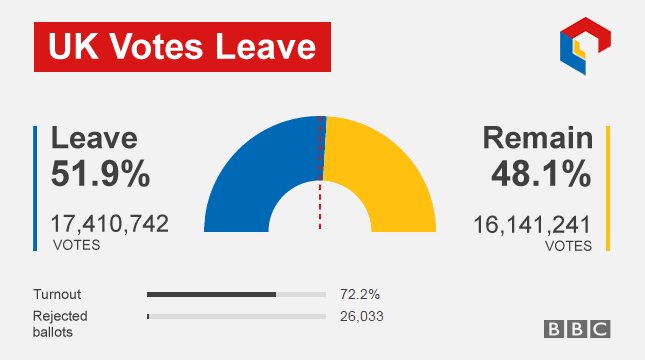
Vote Leave on 23 June 2016. 


* The existence of fiat money, and central- and fractional reserve banking have made such debt accumulation possible. In fact, in their absence, government spending and bureaucratic expansion to the extent we've seen would have been impossible due to a lack of financing.
** The Road to Serfdom, Friedrich Hayek
_______________________


Update 24 June 2016: The UK elected to LEAVE the EU.


Related:

The Ever-Rising Direct Costs of Central Planning

Saturday, 14 May 2016

Something for the Week End: BREXIT - The Full Movie


Monday, 14 March 2016

ECB 2015 Financial Accounts: The Ever-Rising Direct Costs of Central Planning

Source: Irish Mirror (click this link for a history lesson of what really matters to these bureaucrats)

A few weeks ago the European Central Bank (ECB) published its financial accounts for 2015. Following last year's indulgence, the ECB spending spree continues despite the ever-growing debt problems facing the eurozone at large. An extravagant brand new skyscraper and the launch of the Single Supervisory Mechanism (SSM) explain many of the cost increases during the year ultimately paid for by citizens of the member countries. 

During 2015, total administrative expenses increased a whopping €187 million, or 27.5%, to €864 million. According to the ECB, "This increase was mainly due to the commencement of the depreciation of the ECB’s main building and higher costs incurred in connection with the Single Supervisory Mechanism (SSM)."

The largest contributor to this increase in total administrative expenses was staff costs which increased by almost €140 million, or 46.4%, "...mainly owing to the higher average number of staff employed by the ECB, as well as the higher net expense in relation to post-employment benefits and other long-term benefits" according to the ECB.

Staff costs per head increased to €153,551, up 31.4% on 2014.

The depreciation costs associated with now housing ECB staff in a magnificent brand-new skyscraper, built during a period when austerity was imposed on many eurozone members (and still is), increased nearly €49 million, an increase of more than 318% compared to 2014. 

Furthermore, total administrative expenses have now nearly doubled since 2012, an increase of more than €400 million in just three years.

Source: ECB, EcPoFi

Of course, the introduction of the SSM does not mean member countries are now spending less monitoring their domestic banks. On the contrary, they're likely having to spend more just to follow up and implement the dictates launched from the ECB ivory tower. The doubling up of costs, and hence increased bureaucracy, is a hallmark of the eurozone and the EU, just as it is for any other large-scale central planning project. The bureaucrats win, while the rest have to work harder and save less to pay for the extravagance.

Do remember that the above are just some of the direct costs involved in "running" this wonderland for bureaucrats. It's truly shocking just how quickly the citizens of Europe forgot about the Soviet Union, isn't it.

Thursday, 25 February 2016

Draghi's WhatEverItTakes Is Failing

“But the problem [with monetary policy] is not so much what we can do, but what we ought to do in the short run, and on this point a most harmful doctrine has gained ground in the last few years which can only be explained by a complete neglect – or complete lack of understanding - of the real forces at work. A policy has been advocated which at any moment aims at the maximum short-run effect of monetary policy, completely disregarding the fact that what is best in the short run may be extremely detrimental in the long run, because the indirect and slower effects of the short-run policy of the present shape the conditions, and limit the freedom, of the short-run policy of tomorrow and the day after. I cannot help regarding the increasing concentration on short-run effects - which in this context amounts to the same thing as a concentration on purely monetary factors - not only as a serious and dangerous intellectual error, but as a betrayal of the main duty of the economist and a grave menace to our civilisation”. -  F.A. Hayek


"Whatever it takes" is of course nothing less than propping up banks and desperately trying to inflate the money supply. By the looks of things, he seems to be failing once again as the various money supply growth rates have declined sharply since last summer. It is unknown whether Draghi and his central planning team in the brilliant new ECB building, lavishly built during challenging economic times for member countries, ever did study Hayek. What is blatantly obvious however is that his short term focus will wreak havoc with long term economic progress in the eurozone. 


Friday, 29 January 2016

Charts of The Day: The Manic Depressive ECB Monetary Policies


I'll leave you with this question: how can anyone sensibly plan is such a manic depressive monetary environment? 

Wednesday, 11 November 2015

The Madness of Euzone's Chief Monetary Crank

Draghi is speaking again today taking the opportunity as he always does to push his central planning infused political agenda:


Meanwhile, he is also hard at work creating another debt boom which can only make the damage already done by faulty monetary policies and insane government spending and debt accumulation that much worse. You simply cannot solve a debt problem by creating more debt.

Picture by The Telegraph

No amount of "economic and monetary integration", "pooling more sovereignty" and "common governance" can sort out the catastrophic mess the ECB and the commission have created together with governments. In fact, it will only make matters even worse. A good start would therefore be to end ECB's monetary policy making altogether sooner rather than later. 


Wednesday, 4 November 2015

Risk-Free Rate and Market Risk Premium Used by Analysts for 2015

Professor Pablo Fernandez and colleagues from the University of Navarra - IESE Business School have just released the annual survey Risk-Free Rate and Market Risk Premium Used by Analysts for 2015 (access 2014 and 2013 here).

In addition to the survey numbers themselves (personally, I use the money supply growth rate as the minimum "risk-free" rate rather than a government bond yield), I especially liked these two comments from the report,
Most of the analysts use a Risk-Free Rate (RF) higher than the yield of the 10-year Government bonds. A reason for it and for the huge dispersion may be the activity of the European Central Bank (ECB). The risk-free rate (RF) is the required return to Government bonds when nobody (not even the ECB) manipulates the market.
and 
A comment about the Quantitative Easing (QE) implemented by the ECB in 2014, 2015... It is just a strange synonym for “print a lot of money (euros) and buy many, many bonds of the countries in the EU”. By doing so, bond prices increase (and bond yields decrease) dramatically. Some people refer to this “QE” as “market abuse of the ECB”, “market manipulation”, “altering competitive markets”, “expropriation of savings”… We agree with all this definitions: they are clearer than “QE”.

Echo that!

Read the full report here.  

Wednesday, 28 October 2015

Re-Inflating the Damage Caused by Inflation

The ECB today published the monetary stats for September.


Also see: Myopic Monetary Policies

Wednesday, 21 October 2015

The Crank Report, Issue #10 (21 October 2015)

In this issue: 
  • Myopic Monetary Policies
  • The U.S. Stock Market - When Will Poor Economic Fundamentals Seize to Be A Blessing?
  • The "Austrian" True Money Supply Weekly - Only QE4 or Increased Deficit Spending Can Save the Growth Rate Now
  • The Discounted Value of Monetary Stimuli is Dropping - FAST
  • Table: The "Austrian" True Money Supply - 1981 to YTD 2015


<click top right corner to enlarge>

Chart of The Day: The Wrecking of Most European Countries

Source: Eurostat

Tuesday, 1 September 2015

The Crank Report, Issue #9 (1 September 2015)

In this issue: 
  • Money, Banks and Fractional Reserves
  • The Bank Credit Cycle
  • U.S. Bank Credit: Just an Intermediate Peak or the End of this Cycle?
  • The "Austrian" True Money Supply Weekly - Steady, but Slow Decline in the Growth Rate
  • Crash Alert: The Money Supply to Saving Ratio hits All-Time High
  • The U.S. Stock Market Risk Indicator: Still Time to Avoid Major Losses
  • Table: The "Austrian" True Money Supply - 1981 to YTD 2015


<click top right corner to enlarge>

Tuesday, 4 August 2015

The Crank Report, Issue #8 (4 August 2015)

In this issue: 
  • Central Planning, Democracy and the End of Economic Growth
  • This is Natural Economic Growth...
  • ...and this is Artificial Economic Growth
  • U.S. Economy - Personal Saving Rate Trend Still Heading South
  • U.S. GDP Q2 2015 Release
    • GDP Growth: From Bad to Worse, but You Ain't Seen Nothing Yet
    • The Stock Market and GDP
  • The U.S. Stock Market Risk Indicator: Still Time to Stop at Red Light
  • The Stock Prices to Gold Ratio: Back to 2007 Stock Market Peak Levels
  • Chart: Aggregate Deflationary Pressures Continue in the U.S., UK and Eurozone
  • The "Austrian" True Money Supply Weekly - Lower Bank Credit Growth
  • Table: The "Austrian" True Money Supply - 1981 to YTD 2015


<click top right corner to enlarge>

Wednesday, 22 July 2015

Q1 2015 Debt to GDP Ratio for Eurozone Rises to 92.9%

Eurostat reports,
At the end of the first quarter of 2015, the government debt to GDP ratio in the euro area (EA19) stood at 92.9%, compared with 92.0% at the end of the fourth quarter of 2014. In the EU283, the ratio increased from 86.9% to 88.2%. Compared with the first quarter of 2014, the government debt to GDP ratio rose in both the euro area (from 91.9% to 92.9%) and the EU28 (from 86.2% to 88.2%).
At the end of the first quarter of 2015, debt securities accounted for 79.1% of euro area and for 80.8% of EU28 general government debt. Loans made up 18.0% and 15.2% respectively and currency and deposits represented 2.9% of euro area and 3.9% of EU28 government debt.


How to solve a debt crisis? Add more debt of course. At least that's the thinking of the central planners in Brussels and country politicians as government debt in the eurozone rose by a staggering €253.954 billion (2.77%) from Q1 2014 to Q1 2015. From bad to worse then. Unfortunately, it will become much, much worse as long as eurozone bureaucrats and governments continue their big spending, central planning and anti free market policies. 

Tuesday, 21 July 2015

Nigel Farage: "Mr Tsipras, Take Back Control of Your Country"

From 8 July 2015.